
Historical Context and Evolution
Toy cash registers from the 1950s were more than just playthings – they reflected the technological progress of the era. The original cash register, created by James Ritty in 1879, paved the way for companies like National Cash Register (NCR) to innovate further. By 1906, electric cash registers were introduced, showcasing the rapid advancement in consumer technology. As real cash registers evolved, so did their toy counterparts. Early 20th century toy registers were often modeled after real NCR machines, encouraging kids to learn about saving money while having fun. By the 1950s, these toys incorporated more mechanical features like buttons and chimes, mirroring the era's fascination with all things mechanical. The introduction of plastic in the 1940s and 1950s revolutionized toy manufacturing. Plastic allowed for more colorful and imaginative designs at a lower cost. These new toy registers, while not as advanced as the electronic versions NCR would later develop, captured the excitement of the growing consumer culture.Key Developments:
- 1879: James Ritty invents the first cash register
- 1906: Introduction of electric cash registers
- 1940s-1950s: Plastic revolutionizes toy manufacturing
- 1950s: Toy registers incorporate more mechanical features
Design and Materials
1950s toy cash registers were crafted to reflect the style of their full-sized counterparts. Initially made from tin and metal, these toys embodied the durability associated with post-war America. The use of stamped metal manufacturing allowed for detailed designs that mirrored real cash registers, often incorporating Art Deco elements. As the decade progressed, plastic became increasingly popular in toy production. This new material allowed for more dynamic and colorful designs, making the toys more appealing to children. Plastic also made production more affordable, coinciding with rising consumer disposable income. These toy registers featured interactive elements like clacking buttons and sliding drawers that jingled, enhancing the play experience. Kids could mimic the customer service interactions they saw in department stores, turning ordinary playtime into an imaginative adventure."Toy cash registers from the 1950s are a nostalgic collectible for many enthusiasts and historians. These charming playthings were designed to mimic real-life cash registers and often featured working buttons, a functioning cash drawer, and other intricate details."
Popular Brands:
- Marx
- Wolverine
- Ohio Art

Nostalgia and Collectibility
For those who grew up in the '50s, toy cash registers hold a special place in their hearts. These toys weren't just about making pretend transactions; they were the centerpiece of countless imaginary scenarios where kids could be store owners, customers, or anything in between. Today, these vintage toy cash registers are sought-after collectibles. They represent more than just childhood playthings; they're tangible pieces of history that showcase the rapid technological development of the mid-20th century. For collectors, these toys offer a unique blend of design, culture, and innovation. In our fast-paced modern world, there's a certain charm in owning toys that reflect past visions of convenience and prosperity. Vintage toy cash registers from the 1950s continue to captivate collectors, allowing them to hold onto a bit of nostalgia and relive the joyful stories of yesteryear.Factors Influencing Collectibility:
- Rarity
- Condition
- Brand reputation
- Historical significance
- Aesthetic appeal
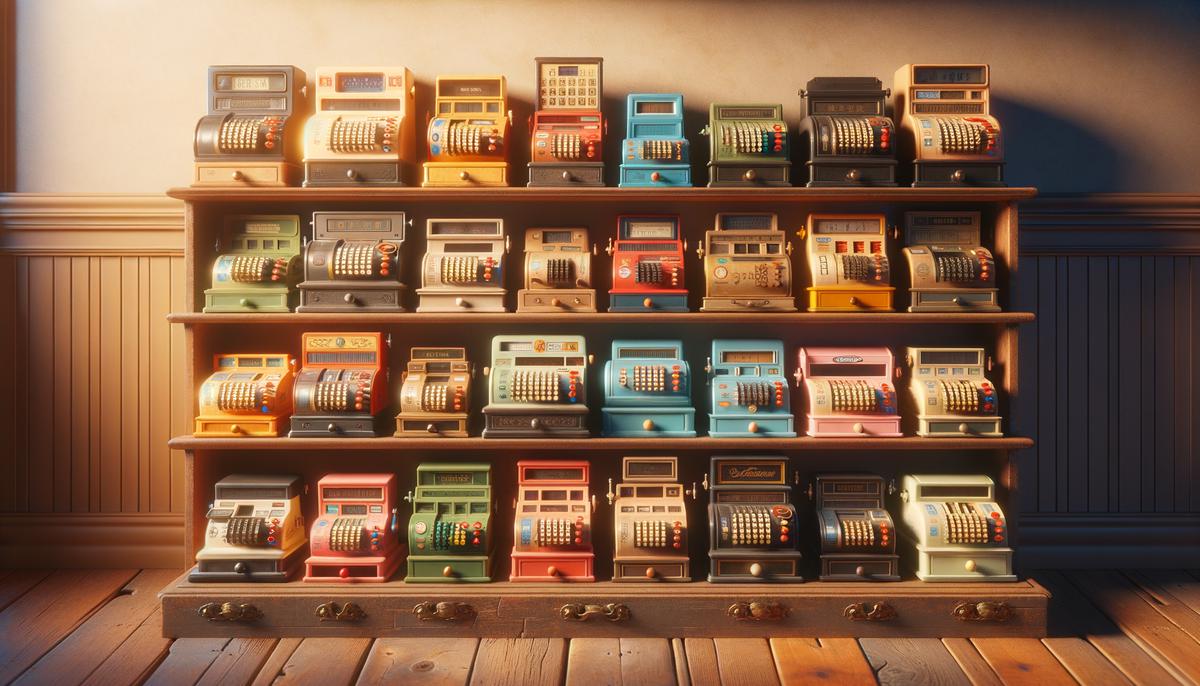
As you wander through the aisles of memory, those vintage toy cash registers stand as reminders of a time when play was infused with wonder and imagination. They capture the spirit of an era where innovation and joy went hand in hand, offering a glimpse into a world that celebrated both simplicity and progress. These miniature marvels continue to ring up nostalgia, preserving the echoes of childhood dreams in their timeless designs.
- Ritty J. The First Cash Register. Dayton History Books Online. 1879.
- National Cash Register Company. Evolution of the Modern Cash Register. NCR Corporation Archives. 1906.
- Toffler A. Future Shock. Random House. 1970.
- Moore A. The Penny Bank Book. Schiffer Publishing. 1984.
- Silvers B. Development of the Modern Barcode. Patent Office Records. 1948.