
The Hourglass Silhouette
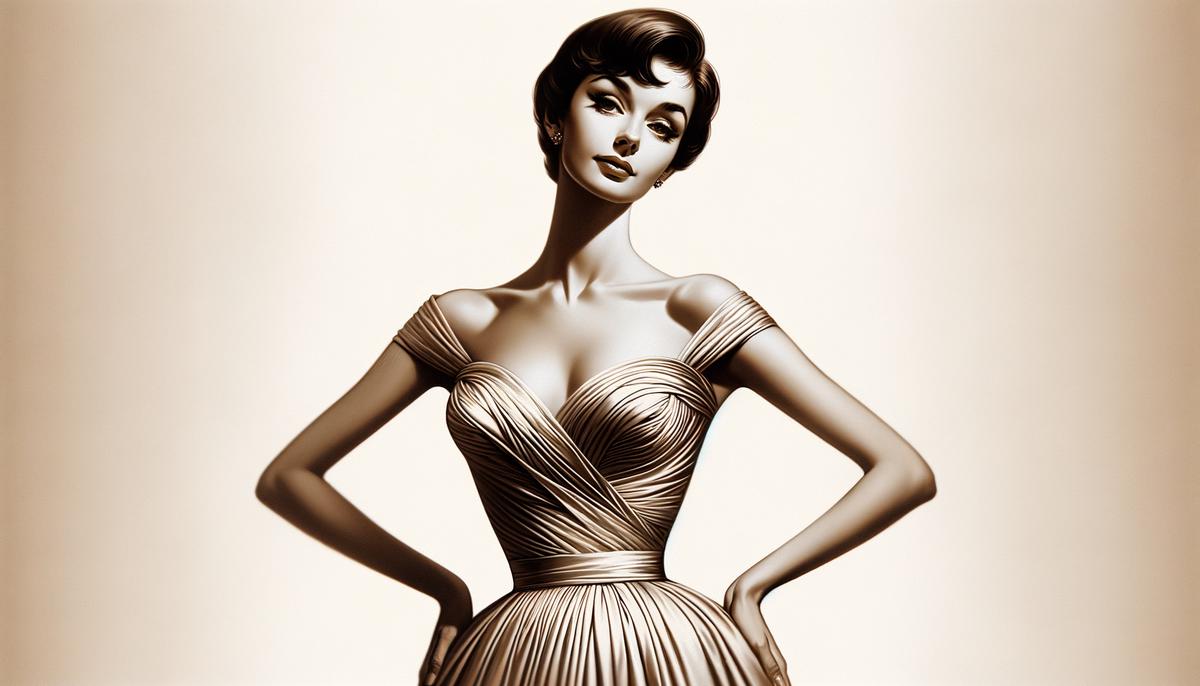
Step into the 1950s, when the hourglass silhouette became the belle of the ball. Christian Dior's New Look changed fashion forever, replacing the sharp 1940s style with something softer. Picture skirts puffed like clouds, meant for spinning on ballroom floors. Dior's vision was shared by Balenciaga and Balmain, each adding their own flair to this ultra-feminine look.
While guys were rocking James Dean jeans, gals were cinching their waistlines tight. Glamour had returned, and fashionistas were accenting their looks with:
- Hats
- Gloves
- Bags
- Stilettos
As the decade rolled on, silhouettes started to shift once more. By the end, fashion was fun again, and women could celebrate looking like the leading lady in a Hollywood movie.

Couture's Golden Age
In the late '40s and '50s, Parisian couture was piecing together a fabulous fashion puzzle. Paris became the glittering city of dreams again, thanks to designers like Dior, Balenciaga, and Chanel.
Dior's atelier bustled with activity, creating jaw-dropping masterpieces. Balenciaga, the maestro of immaculate cuts, crafted gowns like frosting atop a cake. In 1954, Coco Chanel made her comeback, sprucing up wardrobes with chic suits dripping with understated elegance.
The impact of couture was global. Where there's glory, there's always a bit of mischief – enter the knock-off phenomenon. Parisian designs were mimicked from New York to Milan, allowing everyday folks to sport pieces that echoed the extravagance of Paris.
The post-war years weren't just a revival but a renaissance, as couture reminded everyone that style was here to weave stories of magic and allure.

Hollywood Influence
Hollywood in the 1950s was a sparkling era when stars were born not just from talent, but from impeccable wardrobes. Who could resist Marilyn Monroe's charm or Audrey Hepburn's refinement in Givenchy's sleek lines?
The leap from black-and-white to Technicolor catapulted couture into vibrant life. Costume became crucial to films, with directors and designers working hand-in-hand. Edith Head and William Travilla orchestrated show-stopping ensembles that could steal the scene.
"Costume designers were the unsung heroes, crafting iconic looks that became forever imprinted on the public's psyche. They didn't just devise attire; they defined glamour."
Hollywood proved that clothes were more than mere coverings—they were expressions of personality. With each wide-eyed viewer, a little bit of that silver-screen magic made its way into homes, turning mere mortals into stars within their imaginations.
Emergence of New Silhouettes
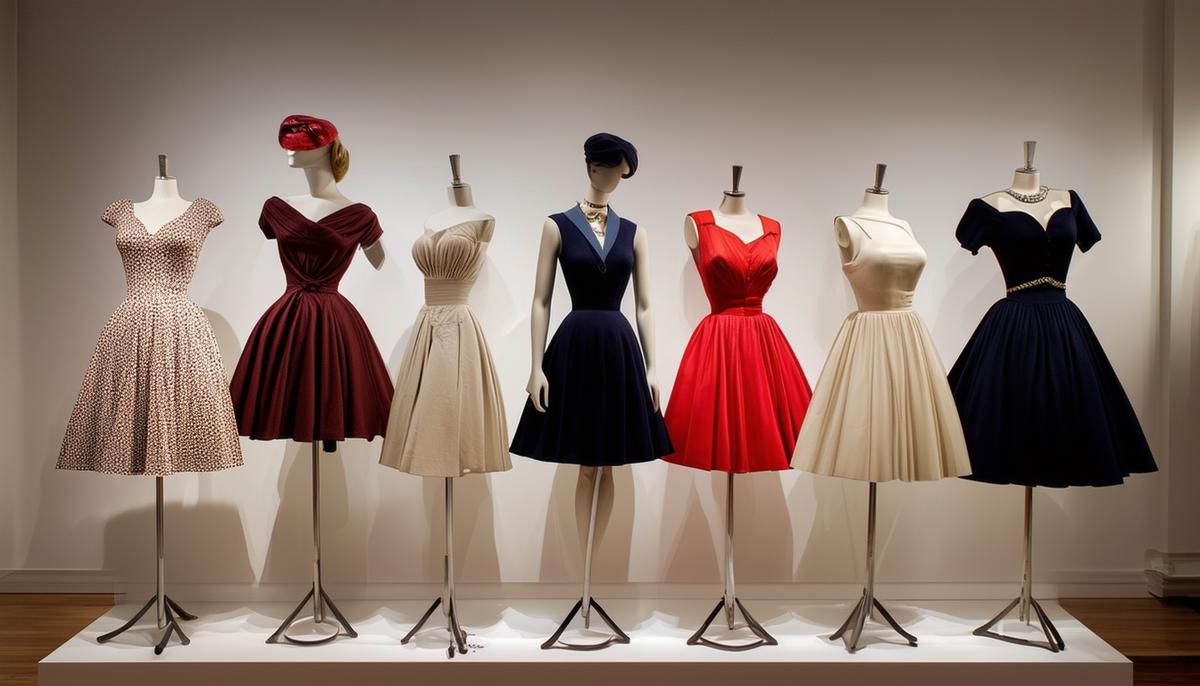
As the 1950s progressed, fashion began to flirt with more relaxed styles. The decade had already seen glamorous gowns and cinched waistlines, but now linear designs like the A-line and trapeze silhouettes emerged.
Coco Chanel returned to the scene, introducing refined designs with straight, unfussy lines. Dior contributed with his H-line and Y-line collections, shifting focus from waist-centric glamour to broader fashion possibilities.
This new wave of fashion was like a bridge between eras, carrying the refinement of the 50s while hinting at the liberating styles of the 60s. As hemlines inched upward and skirts flared with carefree abandon, these silhouettes whispered of the yet-to-arrive miniskirt revolution.
With each gentle line and graceful curve, this new fashion motif was more than cloth and thread—it was a celebration of what's next.
Rise of the Stiletto
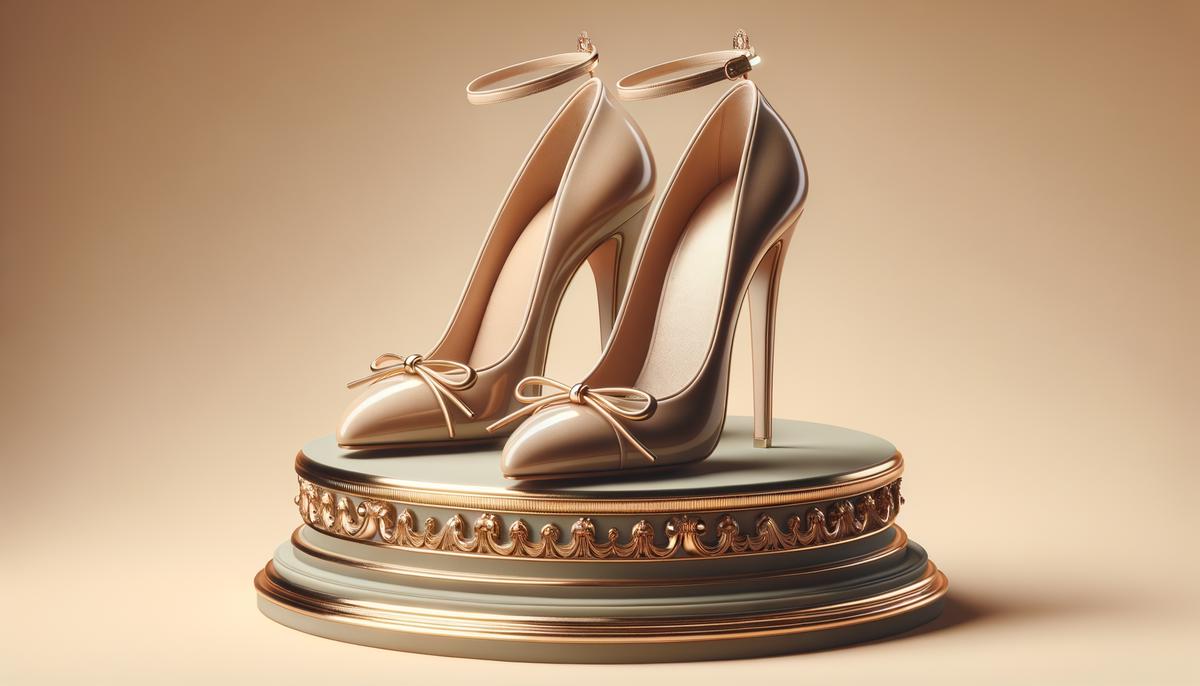
Let's talk about the rise of the stiletto heel – a sleek, elegant shoe that became an emblem of sophistication in the 1950s.
Roger Vivier and Salvatore Ferragamo were the virtuosos of this slender revolution. Vivier, collaborating with Christian Dior, crafted heels as light as whispers. Ferragamo incorporated steel reinforcements, ensuring these delicate-looking marvels could withstand daily wear.
Stilettos quickly became the perfect punctuation to Dior's New Look. They offered a delightful paradox: grounding you in everyday life while elevating you to the heights of fantasy.
These shoes could turn a simple sidewalk into a runway, echoing the inner strength and grace of the women wearing them. Stilettos secured their legacy as a hallmark of 1950s fashion, capturing the essence of an era with each confident click.
The 1950s fashion trends, from the iconic hourglass silhouette to the rise of the stiletto, continue to inspire today. These elements were expressions of a time filled with optimism and elegance, leaving a lasting mark on the fashion world.
- Dior C. The Little Dictionary of Fashion: A Guide to Dress Sense for Every Woman. V&A Publishing; 2007.
- Mendes V, de la Haye A. Fashion Since 1900. Thames & Hudson; 2010.
- Steele V. Fifty Years of Fashion: New Look to Now. Yale University Press; 2000.