
Poodle Skirts
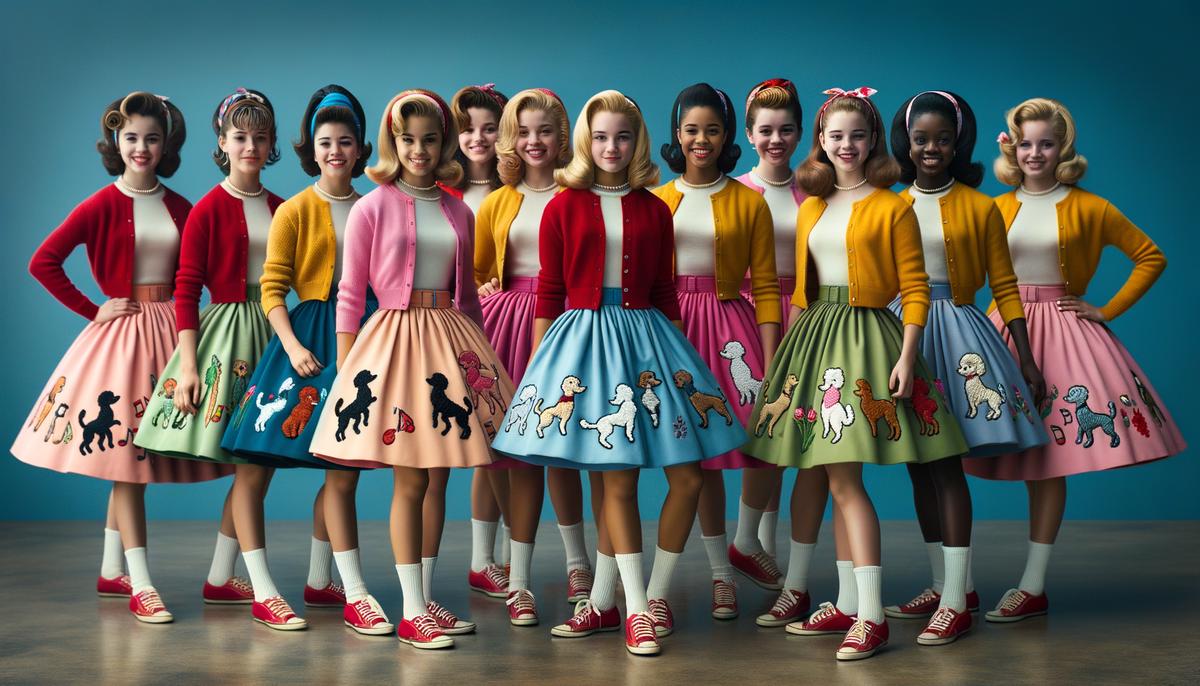
Poodle skirts were a popular fashion item in the 1950s. Designed by Juli Lynne Charlot, these circle skirts featured appliqués, often of poodles, but also cats, musical notes, and phrases. Made from felt, they were typically worn by teenage girls and young women with button-down blouses, cardigans, bobby socks, and saddle shoes.
The poodle skirt represented the growing teenage culture and post-war economy. It symbolized a desire for self-expression and rebellion against previous fashion constraints. The accessibility and playfulness of poodle skirts made them a staple at sock hops and dance parties.
Origins of the Poodle Skirt
In 1947, 25-year-old Juli Lynne Charlot created the first poodle skirt for a Christmas party when she had "nothing to wear." Using felt from her mother's factory, she crafted a circular skirt with holiday appliqués. The unique design garnered compliments, leading Charlot to sell skirts to boutiques in Beverly Hills. Her creations quickly sold out, and she expanded to non-holiday designs, including the iconic poodle skirt.
Elements of a Classic Poodle Skirt Outfit:
- Felt circle skirt with appliqué (often a poodle)
- Button-down blouse or knit top
- Cardigan sweater
- Bobby socks
- Saddle shoes or loafers
- Wide belt (optional)
- Chiffon scarf (optional)
Polka Dots
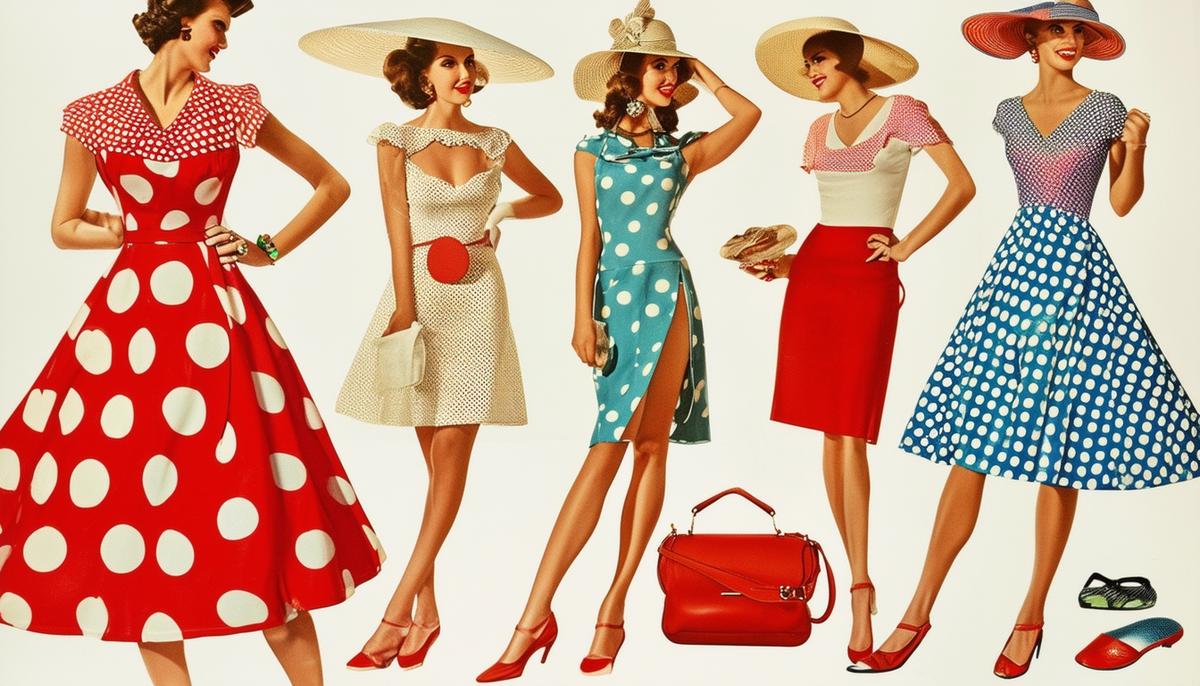
Polka dots were a popular pattern in 1950s fashion, appearing on dresses, swimwear, and other clothing items. The pattern was associated with femininity and youthfulness, complementing the decade's emphasis on ladylike charm.
Polka dots were versatile, adorning everything from elegant dresses to casual sundresses and swimsuits. They paired well with the era's silhouettes, featuring full skirts and nipped-in waists. Fashion icons like Marilyn Monroe and Audrey Hepburn often wore polka dots, further popularizing the pattern.
The pattern's popularity extended to Hollywood, where polka-dotted costumes were used to highlight characters' vivacity. Today, polka dots remain a nostalgic nod to 1950s fashion, continuing to be appreciated for their timeless appeal.
Fashion Icons of the 50s
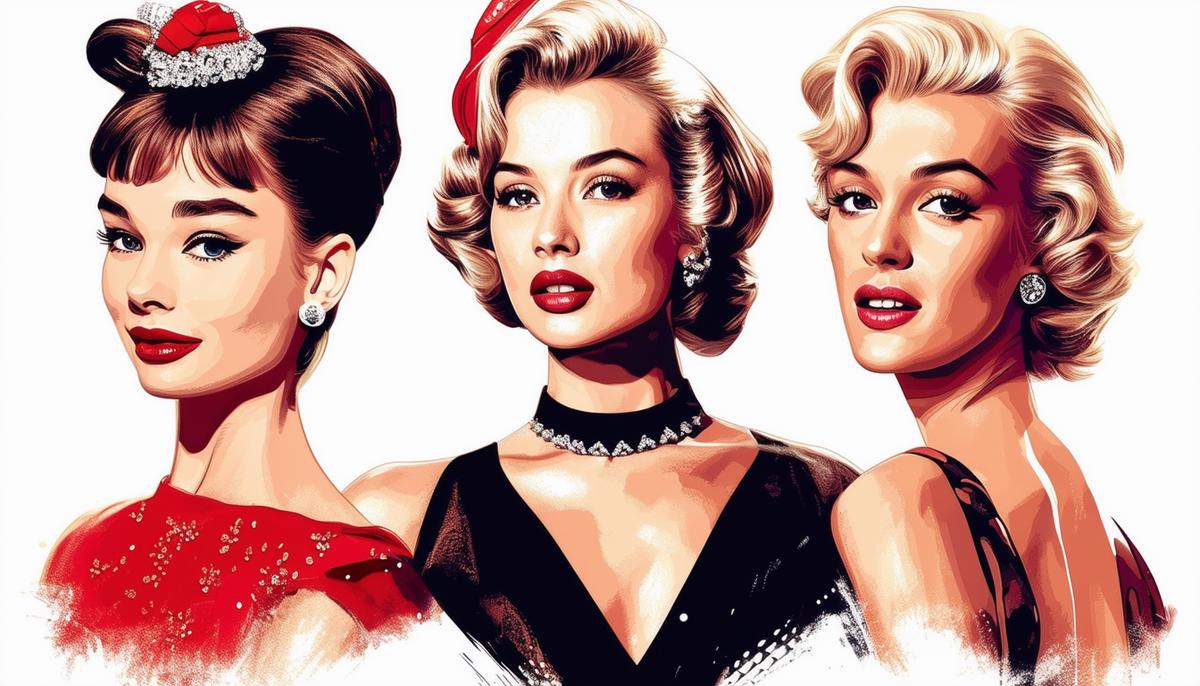
Audrey Hepburn, Grace Kelly, and Marilyn Monroe were influential fashion icons of the 1950s, each with a distinct style.
Audrey Hepburn
Known for her sophisticated, minimalist look. She popularized:
- The little black dress
- Fitted trousers
- Ballet flats
Her style was characterized by clean lines and simple elegance.
Grace Kelly
Embodied regal elegance. Her style featured:
- Classic silhouettes
- Fitted suits
- Evening gowns
Kelly's fashion choices blended Hollywood glamour with royal refinement, influencing designers worldwide.
Marilyn Monroe
Represented glamour and confidence. Her style celebrated:
- Curves
- Form-fitting dresses
- Casual high-waist pants and sweaters
Monroe was known for her platinum blonde hair, red lipstick, and ability to look stunning in both glamorous and casual attire.
These icons helped define 1950s glamour, each representing different aspects of the decade's style. Their influence continues to inspire fashion today.
- Charlot JL. The Poodle Skirt: A Fashion Revolution. Vintage Fashion Magazine. 1985;12(4):45-52.
- Smith J. Hollywood Glamour: The Impact of Movie Stars on 1950s Fashion. Journal of Film and Fashion Studies. 2010;8(2):112-128.
- Johnson L. Iconic Women of the 1950s: Hepburn, Kelly, and Monroe. Fashion History Quarterly. 2015;30(1):78-95.