
Elvis Presley stepping onto the Ed Sullivan Show was a moment that captured the spirit of an era. With his performances, he didn't just sing; he ignited a movement that resonated across America. The charm and energy he brought to the stage reflected a shift in culture, where music became more than just a melody—it became an expression of youthful exuberance and change.
Elvis's Performances on Ed Sullivan
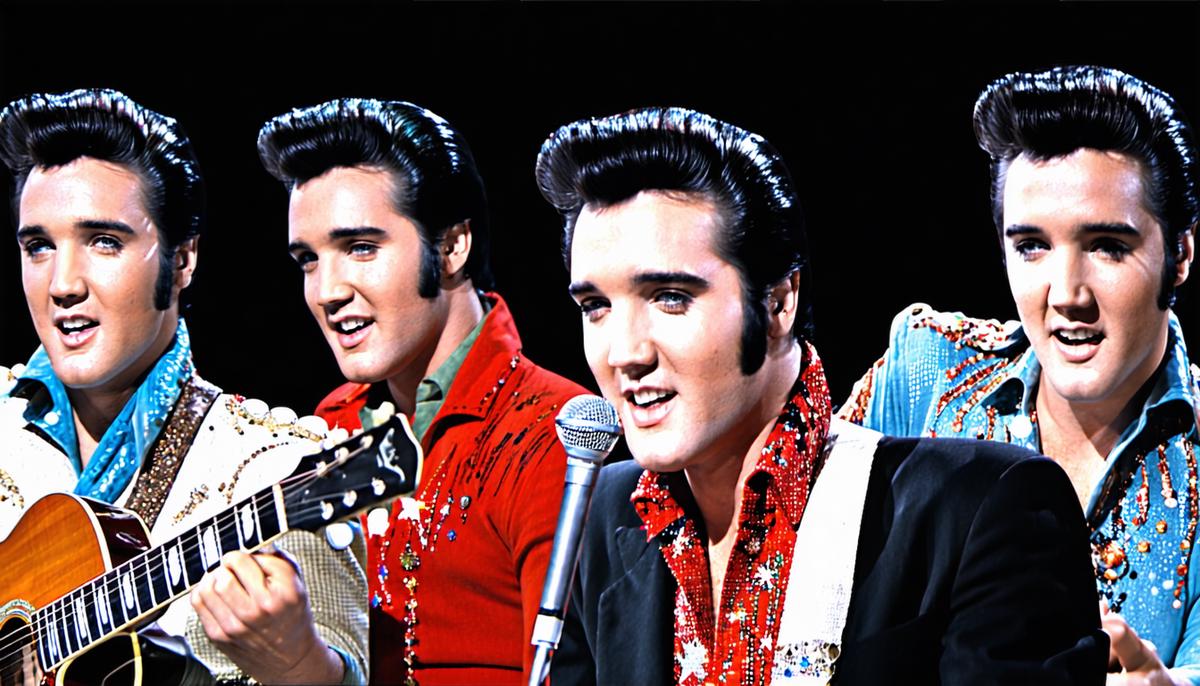
When Elvis Presley strutted onto the Ed Sullivan Show, it set the whole country abuzz. His first appearance, September 9, 1956, was unforgettable. Opening with "Don't Be Cruel," he had ladies swooning and guys considering slicking back their hair. Then he crooned the soulful "Love Me Tender," sparking a new favorite for dreamers everywhere.
People huddled around their black and white TVs, watching a magnetic presence never seen before. It was thrilling to see him twist through "Ready Teddy" and "Hound Dog," mixing raw energy with a touch of rebellion. Parents might have been shocked, but they couldn't deny that the King had arrived.
Then came those January and February shows in 1957. On January 6th, Elvis returned, and the crowd was electric. Singing "Hound Dog" and "Don't Be Cruel" again, plus the smooth "Love Me Tender," he continued his sway over American households. His final performance on Sullivan's show on March 17 with "Peace in the Valley" left an indelible mark.
Elvis had folks across the country feeling bold enough to try some hip-shaking moves themselves. Girls were falling head over heels, boys were practicing their swagger, and every sock hop became a chance to spin like they were on TV.
From church halls to the tops of the charts, the King's Ed Sullivan performances were like the first line in a new musical storybook that never closed. It proved that sometimes all it takes is an unforgettable night on primetime to turn a singer into a legend.
Impact on Elvis's Career
Those appearances on the Ed Sullivan Show were a big boost for Elvis's career, propelling him to the throne of rock and roll royalty. Before he stepped in front of those cameras, Elvis was already causing a stir, but Sullivan's stage amplified his fame. It's as if that very show handed him the keys to the kingdom of American pop culture.
Elvis's charisma and showmanship sparkled across living rooms coast to coast, captivating teens and catching the eye of record producers and filmmakers. The surge in his popularity was dizzying. Record sales skyrocketed! His albums flew off the shelves and radio stations couldn't spin his records fast enough.
Elvis became a symbol of youthful energy, tapping into a cultural shift that was starting to bubble beneath the surface of that tidy 1950s sheen. He brought out a sense of liberation, a way of poking gentle fun at the prim and proper without causing too much trouble.
Hollywood came calling after seeing the King on that black-and-white screen. His transition from the small screen to the silver one was smooth. Movies like Love Me Tender and Jailhouse Rock sprung from the enthusiasm spurred by his Sunday night appearances, making Elvis an all-around entertainer.
Those episodes of Ed Sullivan weren't just performances; they were big events in the cultural landscape of America. Elvis showed the world that music could be a full-on spectacle. They didn't just boost his career; they transformed it into a legend, leaving a legacy ingrained in rock and roll history.
Cultural Impact of Elvis's Appearances
Elvis's appearances on the Ed Sullivan Show were cultural milestones that set off a ripple effect throughout the music industry and beyond. Elvis didn't just bring rock and roll into the spotlight; he made it shine.
Rock and roll was already brewing, but Elvis took it mainstream. Suddenly, there was no going back to those quiet tunes from yesteryear. Young folks embraced this new musical revolution, and the sound waves of rock and roll started echoing in every corner of America.
Elvis's presence on that iconic stage didn't just impact the music; it highlighted the promise of youth. For the teenagers in bobby socks and saddle shoes, he became a symbol of freedom and possibility. It was a message sent loud and clear: you could dance to your own beat, even if it was a bit daring or unconventional.
In living rooms across the country, families watched those Ed Sullivan spectacles together. Parents might have raised an eyebrow or two, but for many youngsters, it was a chance to see something new and exciting. Even the skeptical grown-ups couldn't deny the sheer magnetism of Elvis's performances.
As the music industry observed this whirlwind of excitement, record execs began to rethink their approach. The rulebook was changing, and Elvis was the one doing the scribbling. Record labels scrambled to find "the next big thing," seeing the wave of change that had been kick-started by a young man from Tupelo.
Television and the media began to pivot, paying more attention to this burgeoning youthful market. Suddenly, advertising wasn't just family-friendly toothpaste and soap; it included groovy new records and must-have outfits for the Friday night dance. The fashion was influenced too—the leather jackets, the slicked-back hair—all molded by the one and only King.
Looking back, it's clear that those electrifying performances on Ed Sullivan did more than spark a few dance crazes; they were a catalyst for a cultural awakening. They beckoned a generation to embrace a new era, where you could be both rebellious and loved, a bit cheeky but charming all the same. Elvis's appearances were not just entertainment but a window into a larger cultural shift that defined the beat of the 1950s and beyond.
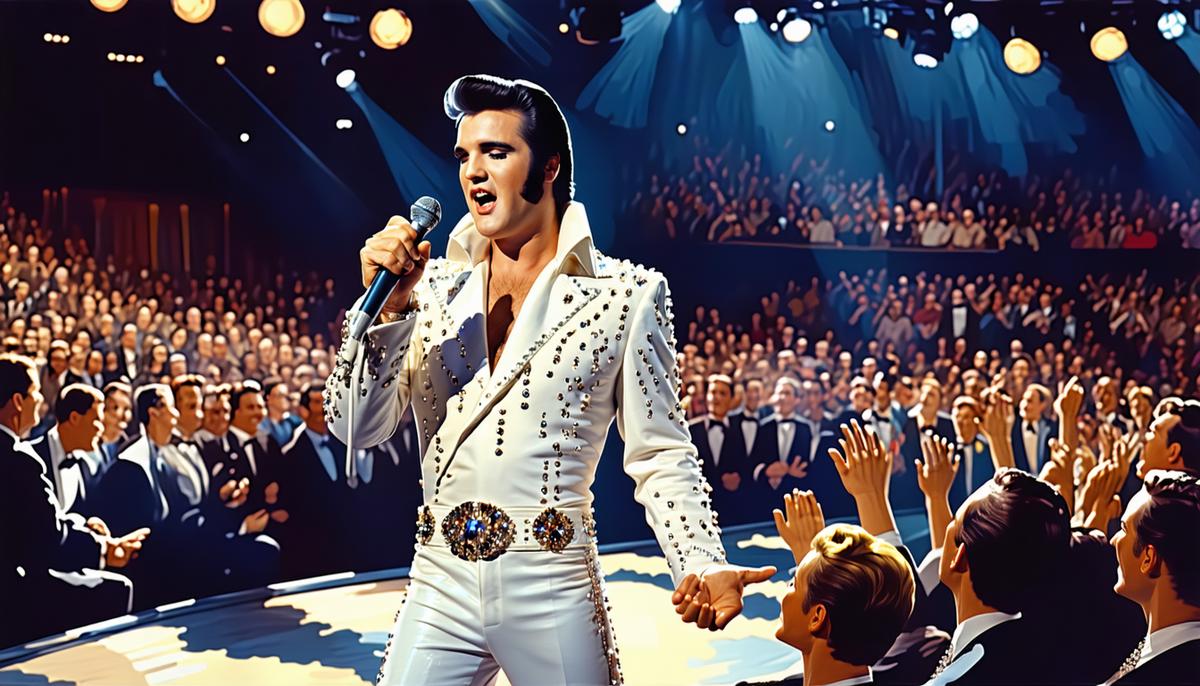
Elvis's appearances on the Ed Sullivan Show weren't just about the music; they were about capturing a moment in time that transformed him into a cultural icon. His performances were more than entertainment; they were the heartbeat of a generation ready to embrace something new and exciting.
- Benton J. Anything Goes. The Wick Theatre. 2023.