
1. Elvis Presley's Debut (1956)
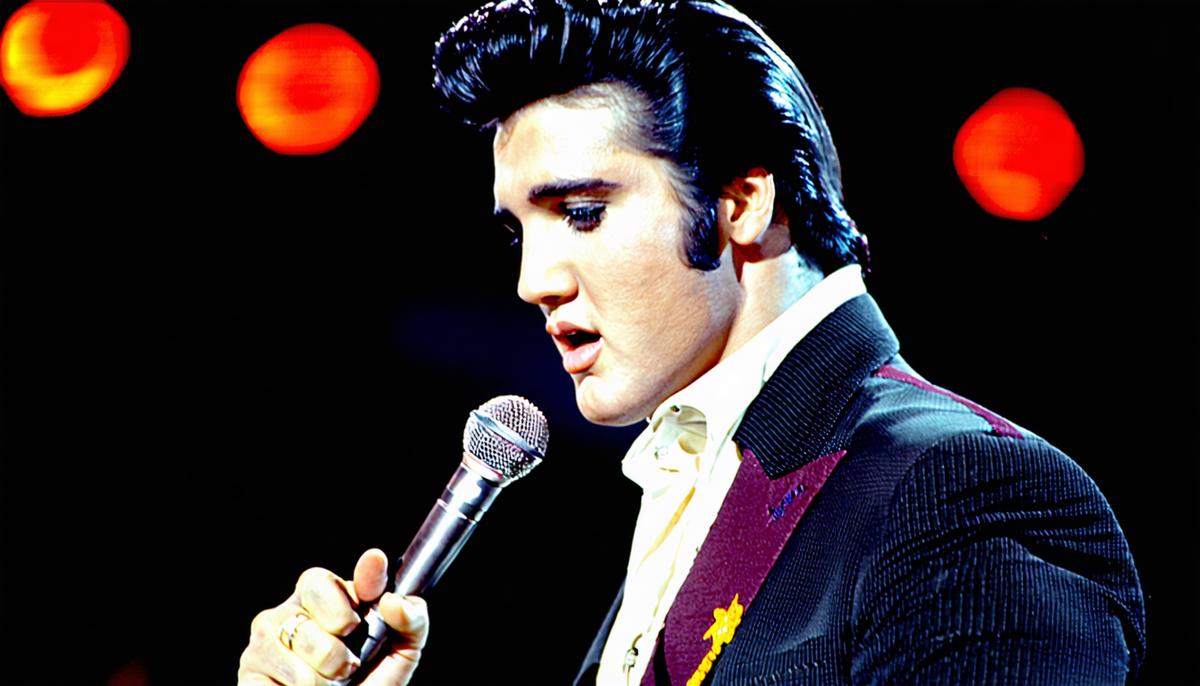
Elvis Presley's debut on The Ed Sullivan Show in 1956 was a big deal. Picture Elvis stepping onto the stage, ready to sing "Don't Be Cruel" and "Love Me Tender." Over 60 million viewers tuned in to watch this young rock-and-roll sensation.
Elvis didn't just sing; he performed. His smooth voice and every hip shake left fans swooning and parents puzzled by this new craze. He won over the crowd completely, setting hearts racing from coast to coast.
Nobody had seen anything like it before. The impact was instant. Houses across America buzzed with chatter about Elvis. In living rooms everywhere, people were:
- Dancing
- Singing along
- Trying to copy those famous moves
The show became the talk of the town, a moment of rock-and-roll magic that made Elvis Presley the King of Rock and Roll.
2. Buddy Holly and the Crickets (1957)
Buddy Holly and the Crickets took to The Ed Sullivan Show stage and gave America a performance to remember. Buddy, with his thick-rimmed glasses and boy-next-door charm, strummed his guitar with a twinkle in his eye.
When they played "That'll Be the Day," you could feel the excitement through the TV sets. The song was a hit that made kids want to dance and parents whisper about this "new sound."
Buddy Holly, with his easy smile and talent, made audiences fall for his lively beats and sincere lyrics. There was something relatable about him that spoke straight to the heart.
This wasn't just a show; it was a movement. Buddy Holly and the Crickets became legends, helping to change the sound of a generation with their performance on Sullivan's stage.

3. Bobby Darin (1958)
Bobby Darin hit The Ed Sullivan Show stage in 1958 with a splash. Picture young Bobby, full of charm, ready to give America a hit that had everyone singing along. "Splish Splash" wasn't just a song; it was a fun anthem of good times.
Darin sang with energy that seemed to bounce off every wall in the studio. His stage presence was magnetic, making viewers feel as if he were singing directly to them. Those watching at home couldn't help but grin, imagining themselves diving into those catchy rhythms.
"Splish Splash" wasn't just a performance; it was a cannonball into the nation's hearts.
It was a performance that showed how music could be as refreshing as a cool dip on a warm day, leaving everyone a little bit happier and lighter on their feet.

4. Elvis' Second and Third Appearances (1956-1957)
When Elvis returned to The Ed Sullivan Show for his second and third appearances, America was eager for more. Elvis came back more confident than ever, ready to deliver performances that would become part of American culture.
His performances of songs like "Hound Dog" and "Heartbreak Hotel" were more than just hits—they were cultural moments that echoed across the country. Elvis brought his songs to life in a way only he could. With each hip swivel and grin, he had the audience completely under his spell.
These appearances cemented Elvis's status as an icon, changing the musical landscape. Each time he stepped off that stage, he left behind adoring fans who couldn't wait to see what he'd do next.
By the end of his third appearance, it was clear: Elvis Presley wasn't just a performer. He was leading a youth-driven cultural shift that still echoes today. In those golden moments under the spotlight, a legend was being made—and what a thrill it was to watch!
5. Louis Armstrong (1956)
When Louis Armstrong appeared on The Ed Sullivan Show in 1956, it felt like jazz itself had come to visit America's living rooms. Picture Satchmo with his trumpet, greeting viewers with that warm, unforgettable grin.
As soon as he hit that first note, anyone listening was instantly hooked. Armstrong didn't just play music; he painted scenes of New Orleans streets and swinging jazz joints with every note.
Louis Armstrong's performance was like inviting everyone to gather around and enjoy smooth rhythms and catchy melodies. His playful scats and charming stage presence made jazz accessible to audiences who might've never been to a jazz club.
This wasn't just about music; it was a joyous celebration. Armstrong had a way of making everyone feel right at home, whether they were jazz fans or newcomers. His appearance on Sullivan's stage helped jazz become a beloved part of American culture, showing that music truly brings people together.

The Ed Sullivan Show was a big deal in the golden age of TV, bringing music and magic to screens across America. Each performance wasn't just a show; it was a moment that stuck with viewers. From Elvis's exciting debut to Louis Armstrong's jazzy tunes, these performances didn't just entertain—they made history. Looking back at these iconic moments, we see how they didn't just change music; they shaped a whole generation's spirit.
- Sullivan E. The Ed Sullivan Show: A History. New York, NY: Billboard Books; 2009.
- Presley E. Elvis on Television: The Complete History. Memphis, TN: Graceland Archives; 2000.
- Holly B. The Buddy Holly Story. New York, NY: Harmony Books; 1995.
- Armstrong L. Satchmo: My Life in New Orleans. New York, NY: Da Capo Press; 1986.