
Elvis's Rise to Fame
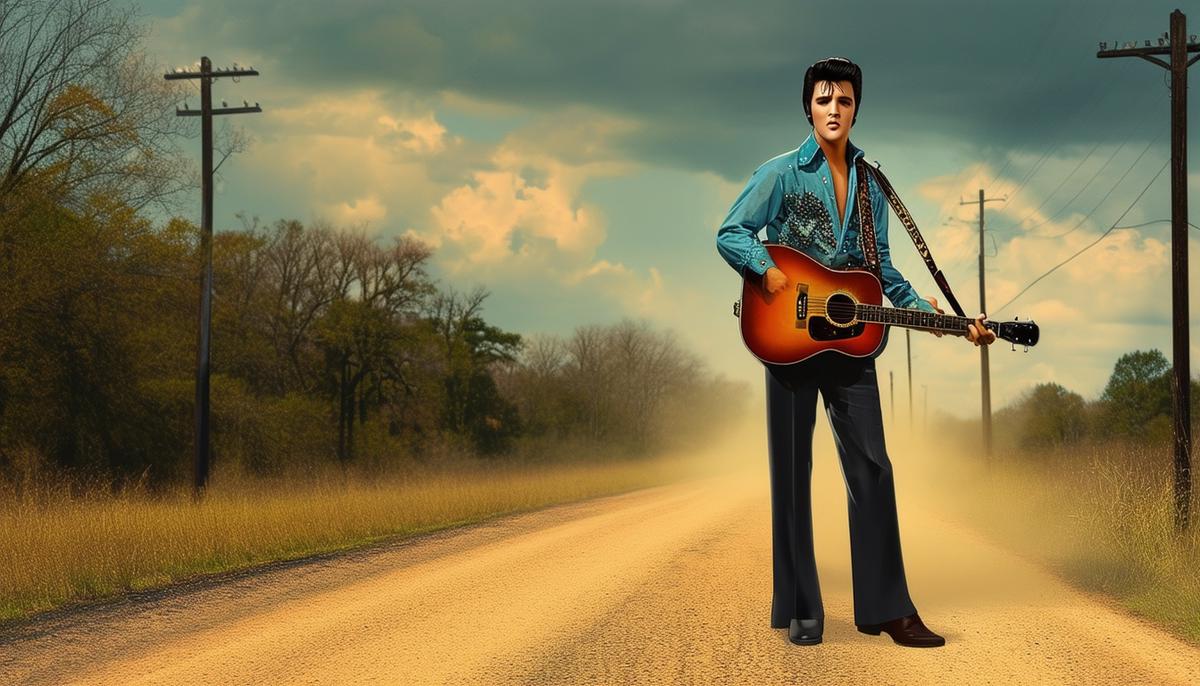
Picture Elvis Presley, a young guy with a guitar and big dreams, growing up in Tupelo, Mississippi. The sounds of gospel and blues filled his ears as he walked those dusty roads.
Sam Phillips, the boss at Sun Records, was always on the lookout for fresh talent. When Elvis's audition tape landed on his desk, Phillips knew he'd struck gold.
"That's All Right" was the game-changer. Recorded in 1954, this lively mix of blues, country, and rockabilly reflected Elvis's diverse background. His smooth voice caught on quick, playing in diners and car radios everywhere.
Elvis's climb to the top was swift. By the time "Heartbreak Hotel" hit the charts in 1956, he was already a big deal. With his catchy tunes and boy-next-door charm, Elvis became the voice of a new generation.
What made Elvis special wasn't just his music, but the spark of rebellion in his performances. He took inspiration from musical greats before him and added his own flair, creating something totally new.
As Elvis churned out hit after hit, he didn't just change music – he changed culture. He paved the way for a whole new world of sound and style, making the 1950s a time to remember.
Musical Innovation and Influence
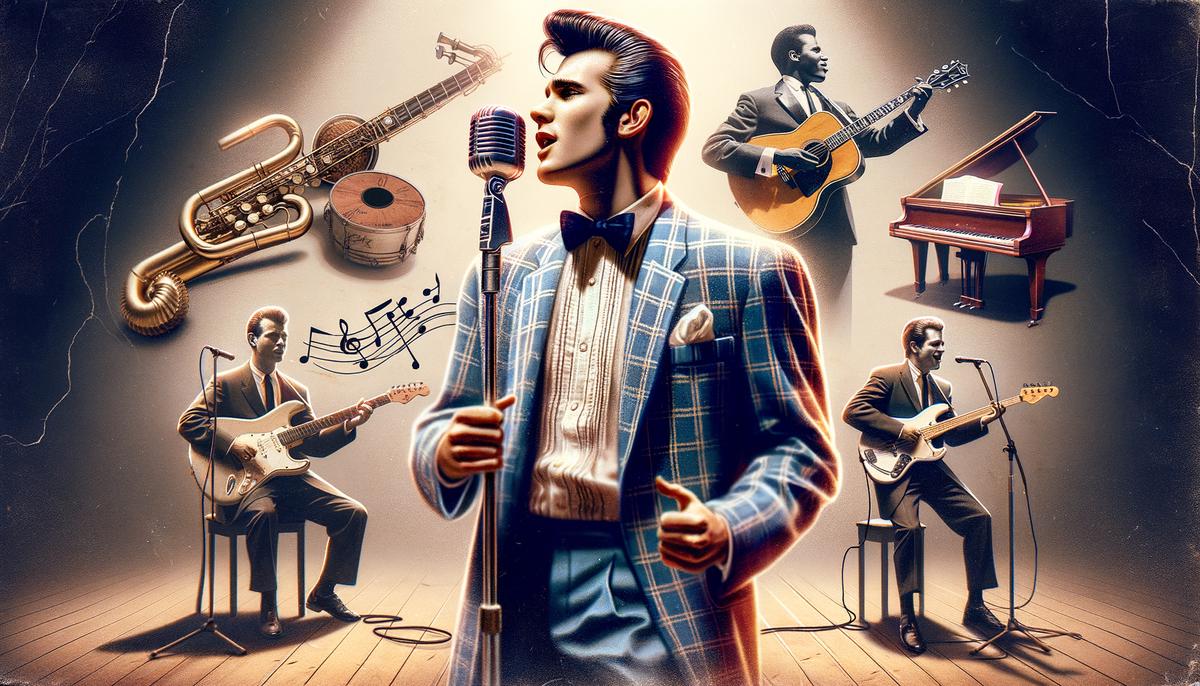
Elvis wasn't just singing; he was mixing up sounds in a way nobody had before. His songs were like a tasty blend of rock, country, blues, and gospel. It wasn't just music; it was something new that got people excited.
On stage, Elvis brought all these styles together:
- Blues added raw emotion
- Gospel brought spirit
- Country grounded it in American roots
- Rock gave it an edgy kick
Elvis had a knack for making this mix appeal to everyone. His voice could handle soft love songs just as well as upbeat tunes that got people dancing. He didn't stick to one style or audience; his music was for everyone.
With Elvis leading the charge, rockabilly was born – a lively mix of rhythm and American flair. This new sound got radios buzzing and dance floors hopping.
But it wasn't just about the music. Elvis brought black and white artists together on the same stage, challenging the way things were done. He showed that music could bring people together, no matter their background.
In the end, Elvis wasn't just a rock star; he was a symbol of unity in a world that was ready for change.
Cultural Impact and Controversies
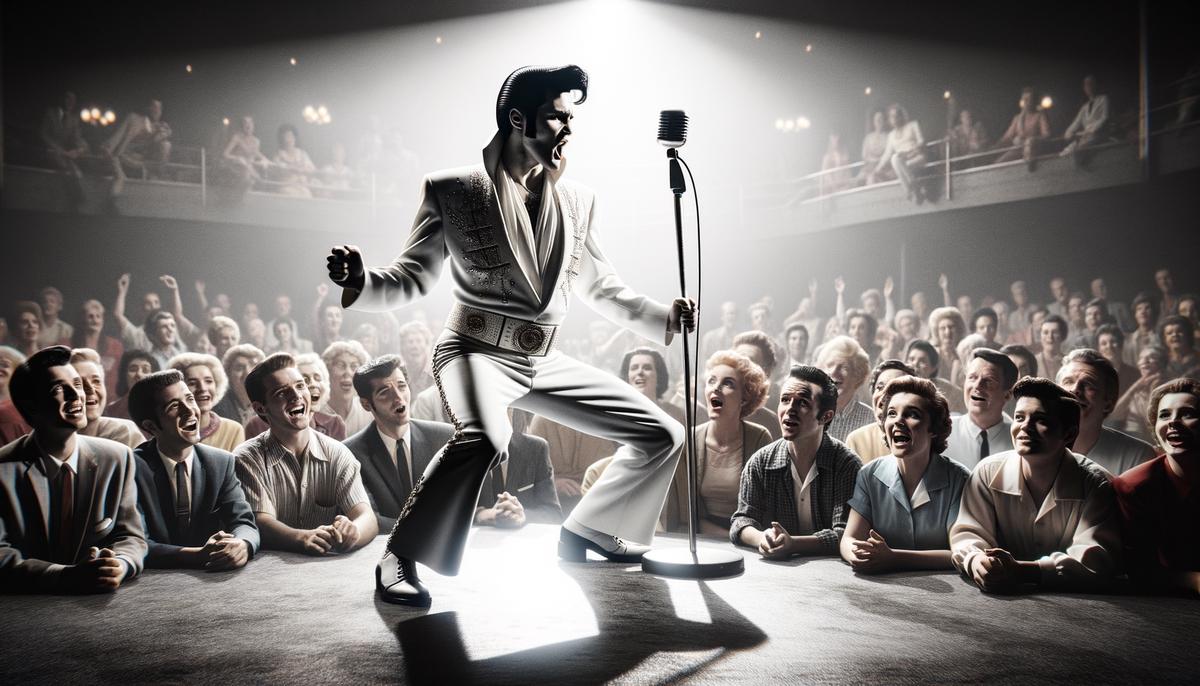
In the buzzing 1950s, Elvis Presley wasn't just a singer – he became a symbol of rebellion for the youth. His famous hip-shaking moves had teenagers excited and parents worried about what the future held.
But Elvis's fame came with its share of debates. Some folks wondered if he was borrowing too much from talented Black artists. Elvis grew up surrounded by gospel, blues, and R&B – genres where Black artists shined. As he got more famous, people started asking questions: Was Elvis giving these communities a bigger platform, or was he just the face selling their sound to a wider audience?
"To say that Elvis was so great and so outstanding, like he's the king…the king of what? I know too many artists that are far greater."– Ray Charles
Some saw it as Elvis appreciating these styles, others thought he was taking credit unfairly. Many in the Black community felt Elvis helped bridge cultural gaps. He shared stages with artists like B.B. King, opening doors – though some argued these doors opened wider for him than for others.
It's true that while the industry praised Elvis as a pioneer, they often forgot to mention his influences – artists like Little Richard or Big Mama Thornton, who first recorded "Hound Dog" before it became Elvis's big hit.
Looking back, it's a bit of a mixed bag. Elvis wasn't out there making speeches about civil rights, but his music did help shift things in society. He supported Black musicians and played at Black venues, which was a big deal back then, even if he didn't talk about politics much.
In the end, Elvis was more than just his music. He got people talking and thinking differently. Some loved him, some had issues with him, but there's no doubt he left his mark on history.
Elvis Presley wasn't just a musician; he was a cultural force that transformed the musical scene of the 1950s. His talent for combining diverse musical styles into something exciting and accessible left a lasting impression on society. Reflecting on his journey, it's evident that his impact went beyond music, connecting different cultures and inspiring a generation to embrace change.
- Halberstam D. The Fifties. New York: Villard Books; 1993.
- George N. Interview with Mojo Media. 2022.
- King BB. Blues All Around Me: The Autobiography of B.B. King. New York: Avon Books; 1996.
- Charles R. Interview with Bob Costas. NBC. 1994.