
7. Gorgeous George Steps Into the TV Ring
Gorgeous George, a flamboyant wrestling character, changed how people saw sports entertainment. With his pompadour and satin robes, he turned every match into a mini-drama. His style captivated audiences, mixing spectacle with sport. George’s magnetism made wrestling more than just a physical contest—it became a showstopper.
He helped transform wrestling from a regional curiosity into a national sensation. TV broadcasters aired this spectacle, drawing audiences closer to their sets. George planted the seeds for the larger-than-life personas we see in wrestling today. Audiences tuned in for the personality as much as the moves—showing the power of charisma in entertainment.


6. Candid Camera Debuts
With the debut of Candid Camera, a wave of laughter swept across 1950s America. Alan Funt created a show that captured the genuine surprise of folks caught in playful pranks. Families gathered around their TVs, waiting to see what sort of mischief would unfold next.
The show offered a dose of fun in an era known for its straightforwardness. It tapped into the universal truth that sometimes, laughter is the best medicine. You couldn’t help but chuckle at the unexpected twists of daily life, seen through Funt’s playful lens.
The catchphrase “Smile, you’re on Candid Camera!“ became a cultural staple. The show left a mark on TV history, paving the way for future hidden camera shows. It reminded everyone of the simple pleasure found in a hearty laugh, documenting the heart and humor of 1950s America.
5. Richard Nixon’s “Checkers” Speech
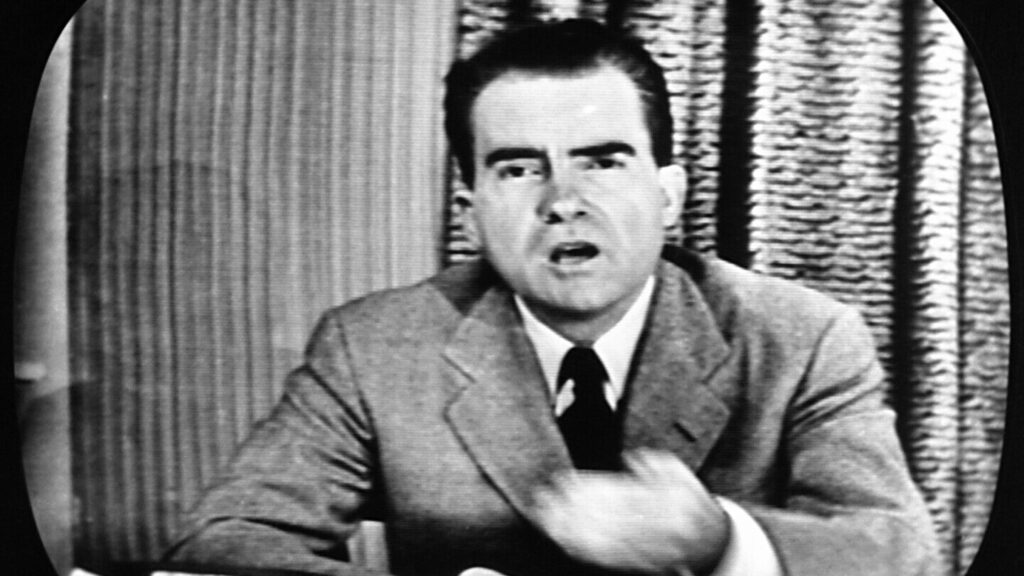
In 1952, Richard Nixon faced allegations of improper financial conduct. His “Checkers” speech was a blend of storytelling and political savvy that played out live on national TV. Nixon laid bare his personal finances and introduced Checkers, the family dog, to the public.
This gesture redefined how politicians could connect with the public through television. In an era where families gathered around TV sets, the sight of a politician getting personal was new. Nixon bypassed political cynicism, appealing directly to the hearts of the American people.
The speech marked a shift in political communication. Viewers weren’t just tuned in for policy; they witnessed a new kind of appeal where character and personal stories could sway opinion. For Nixon, the speech forged a connection with the audience. Families could see a bit of themselves in the Nixons’ simple pleasures and bond with their dog.
"The Checkers speech showed the power of television in political discourse. It's a reminder of how authenticity can transform a moment into history."
4. J. Fred Muggs Joins Today
J. Fred Muggs, a chimpanzee, became an unexpected TV sensation when he joined the Today show. He brought a dash of humor and adorable chaos to morning television when he first appeared on the show on February 3, 1953.
Muggs transformed often stiff morning routines into lively, unpredictable starts to the day. He participated in skits, scribbled with crayons, and sometimes outshone his human co-hosts with his unpredictability and charm.
More than just a novelty, Muggs captured the spirit of a decade that embraced innovation and light-hearted entertainment. Families would gather around their TVs to see what mischief he might get into next. His charm transcended age, making mornings a little brighter and more fun.
In this golden age of television, J. Fred Muggs was a symbol of the magic TV could provide. He invited people to embrace the unexpected, proving that sometimes the best way to start the day is with a monkey beside your morning coffee.

3. Superman Debuts
When Superman took to the airways, it wasn’t just a bird or a plane – it was the dawn of a new era for superhero entertainment. The “Adventures of Superman,” starring George Reeves, left audiences wide-eyed and craving adventure.
Each episode showcased Superman’s courage and extraordinary abilities. Kids enthusiastically tied bath towels around their necks and leaped from couches, transforming living rooms into the streets of Metropolis.
This series set the groundwork for future superhero shows, shaping how generations viewed heroes. Superman became a new kind of role model—one who stood for truth, justice, and the American way.
Supporting characters like Lois Lane added depth to the storyline. These interactions weren’t mere plot devices but symbols of the dynamic between courage and vulnerability.
Superman’s TV debut was more than introducing a comic book character to the small screen; it was bringing an icon to the American psyche. He brought a message of hope and resilience at a time when such ideals felt important.
While the methods of flying may have changed, with CGI now replacing wires, the admiration for Superman remains timeless. Here’s to the thrills and sense of wonder that Superman planted in the hearts of a generation!

2. I Love Lucy: “Lucy Goes to the Hospital”
“I Love Lucy: Lucy Goes to the Hospital” was a landmark episode that captivated 44 million viewers on January 19, 1953. This comedic journey followed Lucy Ricardo’s much-anticipated hospital visit and transition into motherhood.
Lucy wasn’t just a character; she was like a favorite neighbor to many Americans. Her impending motherhood became a shared celebration across the country. The show’s creators brilliantly blended everyday struggles with humor, allowing viewers to see themselves in Lucy’s character.
The episode’s genius lay in turning the universal experience of childbirth into entertainment gold. It served as a blueprint for future TV shows, demonstrating how to weave heartfelt moments with light comedy.
The scrambled madness of getting Lucy to the hospital had America laughing at the slapstick chaos. Amid the laughter, there was an uncanny comfort that only Lucy could bring to the screen.
This episode wasn’t just a television event; it was a cultural touchstone. It gave audiences permission to find humor in everyday living, instilling a sense of community that extended beyond the screen. “Lucy Goes to the Hospital” lives on as a testament to the brilliance of 1950s television, showing that with a little love and laughter, even parenthood could be delightful.
Fun Facts:
- The episode aired on the same day Lucille Ball gave birth to her son, Desi Arnaz Jr., in real life.
- 72% of all televisions in America were tuned to this episode.
- It garnered more viewers than President Eisenhower’s inauguration the following day.

1. See It Now: Edward R. Murrow Skewers Senator McCarthy
Few television moments were as impactful as when Edward R. Murrow’s “See It Now” took on Senator Joseph McCarthy on March 9, 1954. Murrow used his primetime platform to challenge McCarthy’s fear-mongering tactics, showcasing television journalism at its finest.
During a time of red scares and whispered accusations, Murrow stood as a beacon of journalistic courage. He dissected McCarthy’s words and actions with precision, presenting them with a calm that left no room for bluster.
"This is no time for men who oppose Senator McCarthy's methods to keep silent."
Murrow’s broadcast wasn’t just journalism; it was an affirmation of democratic values. He peeled back the layers of McCarthy’s tactics, showing how baseless fear could be used to manipulate. Murrow invited Americans to think critically about the information they received.
The legacy of Murrow’s skewering of McCarthy on “See It Now” is a testament to television’s role in shaping public debate. It reminded viewers that TV could be more than entertainment; it could be a catalyst for societal change.
Murrow proved that sometimes, the brightest light of truth can eclipse even the darkest cloud of fear. His voice echoed through a golden era of television and still resonates today.

The 1950s showed us that TV could be more than just entertainment—it could reflect our shared humanity. Those unforgettable broadcasts entertained and connected us in ways we still cherish today.