
Ah, the 1950s—a time when innovation and optimism danced hand in hand, creating a whirlwind of new ideas and bold experiments. Let’s take a stroll down memory lane to revisit some of these intriguing moments that shaped the decade.
5. DDT: The Household Pesticide Cloud
Picture this: it’s the 1950s, and you’ve got a new approach for keeping mosquitoes at bay. Enter DDT, the pesticide marvel of its time. As a parent worried about mosquito bites, you couldn’t get enough of the stuff. Spray it on your house, your furniture, and even your kids. The buzz around DDT was electric, promising a mosquito-free paradise in your very living room.
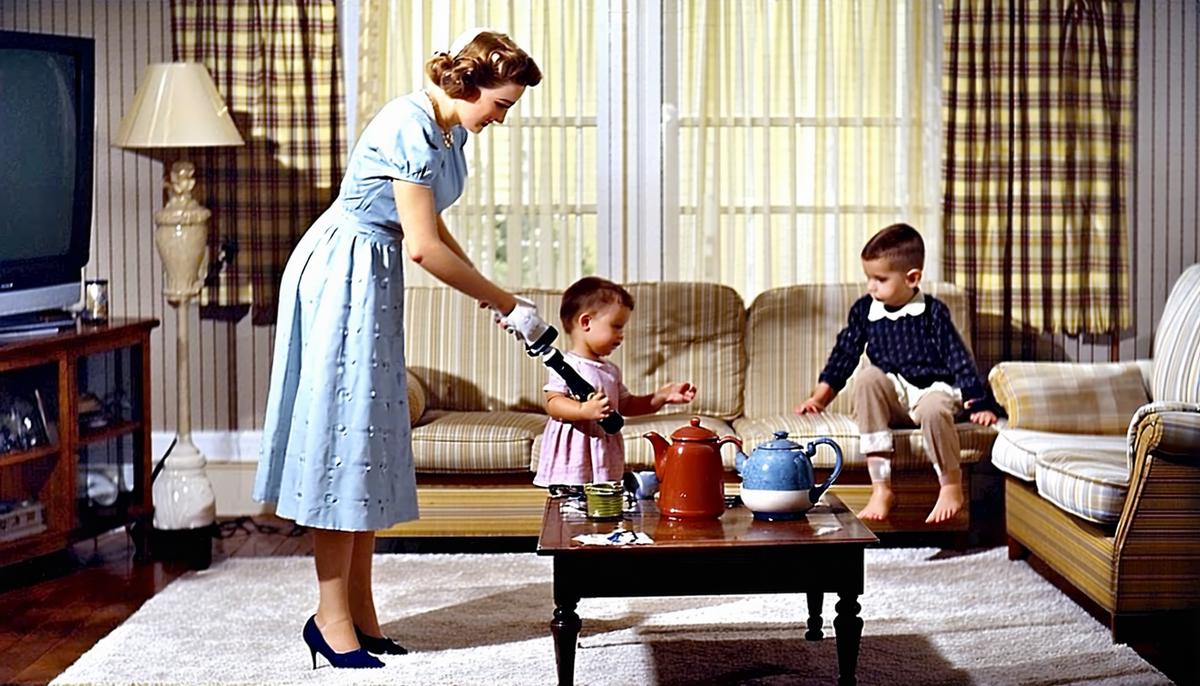
But here’s the kicker—no one realized at first that breathing in clouds of this “miracle” spray wasn’t great for human lungs. DDT hung around in the environment, turning this household hero into a lingering villain. As time went on, experts realized that saturating homes with this chemical had adverse effects not only on pests but on people too—especially the little ones.
Nowadays, the notion of spraying your home with DDT might sound wacky, but back then, it was all about creating the perfect, bug-free home. Ah, the 1950s, where optimism knew no bounds—even when it came in a toxic cloud.

4. Insulin Shock Therapy: Knocking Out Schizophrenia
Enter Insulin Shock Therapy, hailed as a revolutionary treatment for schizophrenia and severe depression. The concept was simple enough: inject a patient with massive doses of insulin to induce a coma, then repeat. The belief was that these comas could somehow “reset” the brain, much like turning your radio off and on to get rid of static.
Doctors thought this was cutting-edge therapy, a miracle reboot for troubled minds, despite the risks of brain damage, memory loss, or death. Families of those suffering were desperate enough to try anything that offered hope. To them, this “shock therapy” was like a golden ticket out of darkness.
Today, insulin shock therapy has been relegated to a cautionary tale of medical misadventure rather than a viable treatment. And while we’re thankful for modern medicine, there’s a little part of us that has to admire the sheer audacity of trying something so off-the-wall in the name of progress.

3. Mercury in Baby Products: A Toxic Misstep
Back in the 1950s, if a little bundle of joy was causing sleepless nights with teething troubles, parents could turn to trusty teething powders and diaper creams for relief. These wonder products, however, came with a secret ingredient that was less “sweet dreams” and more “toxic nightmare”—mercury!

Imagine the look on parents’ faces when they discovered they were rubbing poisonous chemicals onto their precious angels. Suddenly, the allure of calm and content babies came with the realization that they were inadvertently dabbling in a bit of mad alchemy.
Fortunately, it didn’t take long for experts to give mercury the boot once they figured out it was more harmful than helpful. Fast forward to today, and though we’ve seen incredible advances in baby care, we can thank our lucky stars that any products claiming to be miraculous remedies undergo far more scrutiny.

2. Chelation Therapy: The Non-Cure for Heart Disease
Picture this: you’ve got heart disease, a real downer for living the good life. Enter chelation therapy, touted as the next big thing for cleaning out those pesky clogged arteries. It promised an end to heart attacks by simply pumping chemicals through your veins.
Well, hold your horses, because this particular “miracle cure” was the epitome of hope over reality. A therapy originally cooked up for tackling lead poisoning, chelation was as effective for heart disease as using a colander to keep water in a bucket. Despite the hype, not a single artery was cleared by this method.
Still, many folks lined up for their chance at a heart health breakthrough, swept up in the era’s zeal for innovation. In the end, the therapy’s fall from grace was a lesson in the limits of zealous pursuit without a dash of skepticism. Yet in true ’50s style, we continue to be inspired by the ambition to solve things in a snap, just maybe with a bit more caution next time.
1. Polio Vaccine: A Real Miracle Cure
While some “miracle cures” were as dubious as a three-dollar bill, the polio vaccine was the real McCoy. Enter Jonas Salk, the hero who changed lives forever. Before his vaccine, polio was the boogeyman hiding under every parent’s bed, paralyzing thousands of children and striking fear into the hearts of families everywhere.
In 1955, with a needle and a glimmer of hope, parents lined up their kiddos to get the jab that spelled out freedom from fear. Salk, with his selfless decision not to patent the vaccine, let it flow freely across the globe, obliterating polio faster than you could say “sock hop.”

This scientific marvel was a gift that kept on giving, leading to the near-eradication of polio in modern industrialized nations. Today, we look back and tip our hats to Salk for not only conquering polio but for sparking the hope that real change was possible amid a sea of dubious solutions.
In reflecting on the 1950s, it’s clear that while not every venture hit its mark, the spirit of exploration paved paths for future breakthroughs. The polio vaccine stands as a testament to what can be achieved when science meets determination. Here’s to an era that dared to dream big and taught us valuable lessons along the way.

- Farber S, Diamond LK, Mercer RD, et al. Temporary remissions in acute leukemia in children produced by folic acid antagonist, 4-aminopteroyl-glutamic acid. N Engl J Med. 1948;238(23):787-793.
- Murray JE, Merrill JP, Harrison JH. Renal homotransplantation in identical twins. Surg Forum. 1955;6:432-436.
- Sones FM Jr, Shirey EK. Cine coronary arteriography. Mod Concepts Cardiovasc Dis. 1962;31:735-738.
- Kang L, Pedersen N. Quackery: A Brief History of the Worst Ways to Cure Everything. Workman Publishing; 2017.
- US Surgeon General’s Advisory Committee on Smoking and Health. Smoking and Health: Report of the Advisory Committee to the Surgeon General of the Public Health Service. US Department of Health, Education, and Welfare; 1964.