
What if the sky opened up, and something fell, something it never should have been carrying? What if, in an instant, an ordinary family became part of one of the most shocking accidents in history?
It was an ordinary afternoon in Mars Bluff, South Carolina – until the sky decided otherwise. Six-year-old Helen Gregg Holladay and her siblings were playing outside when an object bigger than a school bus came plummeting toward their backyard.
The Mars Bluff Incident
On March 11, 1958, a B-47 bomber had a mishap high above Mars Bluff, South Carolina. The Gregg family was about to witness something unbelievable right on their doorstep. In a bizarre turn of events, the American crew accidentally dropped a nuclear bomb near their home.
Six-year-old Helen Gregg Holladay and her siblings, Walter Jr. and Francis, narrowly escaped disaster when 7,600 pounds of steel and TNT crashed just thirty feet away, obliterating their playhouse. Luckily, the bomb was unarmed, but the TNT still caused a massive crater 50 feet wide and 25 feet deep.
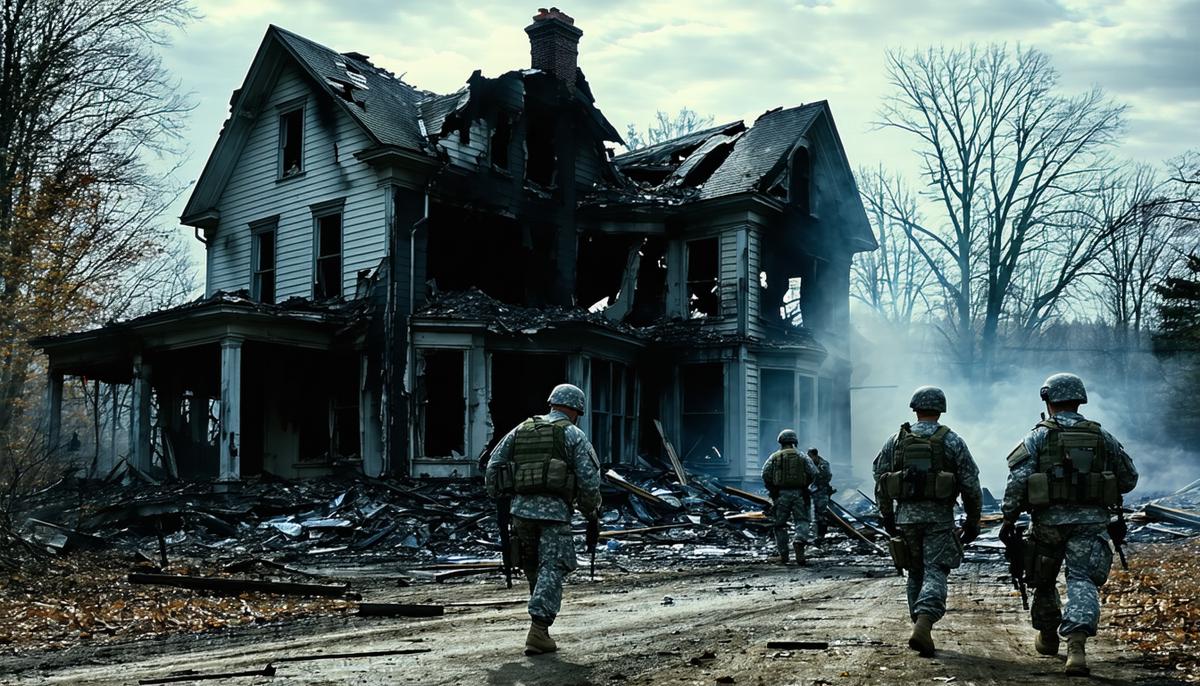
The explosion shook the whole state, feeling like an earthquake to nearby residents. The Greggs’ farmhouse crumbled, and cars on the highway skidded to a stop. In the aftermath, the military tried to downplay the incident, while lawyers secured $54,000 in compensation for the family (about $570,000 today).
The Greggs moved away, but the site became part of local folklore. Some, like Steven Smith, worry about the incident fading from memory. While there are dreams of preserving the area as a historical site, development continues to encroach. Curious folks still visit Mars Bluff, hoping to catch a glimpse of this piece of Cold War history.
Cold War Tensions and Military Mishaps
Behind the shiny facade of 1950s America, the Cold War had everyone on edge. Operation Chrome Dome kept B-52 bombers loaded with nukes circling in the sky, ready for action. But this show of force came with its share of slip-ups.
Human error mixed with mechanical hiccups, leading to more than a few close calls. Accidental flicks of switches or tugs on levers sometimes sent unarmed nukes earthward. These “Broken Arrows,” as they were called, had folks wondering if they might need to duck and cover for real.
Each incident added to the tension, making people question whether the next mistake might kick off an unplanned apocalypse. Despite the nerve-wracking nature of these events, there was a strange comfort in knowing that luck seemed to be on our side, keeping major disasters at bay.
So while people enjoyed their sock hops and TV dinners, they couldn’t help but think about those steel guardians up above, dancing with fate and hoping not to miss a step.

Implications and Legacy of Nuclear Accidents
The Mars Bluff incident and others like it shook people’s faith in military infallibility. It made folks look at the sky differently, wondering if another uninvited guest might drop by. For the military, it meant a hard look at procedures and safety protocols.
These close calls left their mark on the landscape, both physically and in our collective memory. Now we face the question of what to do with these historical sites. Should we preserve them as reminders of the Cold War’s contradictions, or let progress take its course?
As suburbs grow and life moves on, there’s a debate between guarding these atomic memory lanes and embracing new developments. These sites aren’t just holes in the ground; they’re reminders of how close we came to disaster while chasing peace and power.
Whether we choose to preserve these places or not, the lessons learned from the Cold War’s near-misses stay with us. They taught us to step back, reset, and try to get the rhythm just right in our dance with powerful technologies.
Looking back on those tightrope-walking days, the Mars Bluff incident reminds us of our shared history. We made it through those dicey times with a bit of luck and a lot of hope, learning valuable lessons along the way.
- Herzog R. A Short History of Nuclear Folly. New York, NY: Melville House; 2013.
- Schlosser E. Command and Control: Nuclear Weapons, the Damascus Accident, and the Illusion of Safety. New York, NY: Penguin Press; 2013.
- Futrell RF. The United States Air Force in Korea 1950-1953. Washington, D.C.: Office of Air Force History; 1983.