
What if progress came with a price no one saw coming? There was a time when towns thrived, communities felt connected, and the open road was a gateway to opportunity. But then, something shifted. Streets that once buzzed with life grew quieter. Neighborhoods that had stood for generations suddenly vanished. Roads that promised to bring people together somehow ended up pushing them apart.
It wasn’t war, famine, or economic collapse that reshaped America’s landscape—it was something far more ordinary. Something most people never questioned.
What if the very thing designed to unite the country ended up dividing it? And what if, all these years later, we’re still living with the consequences?
The Roads That Built America
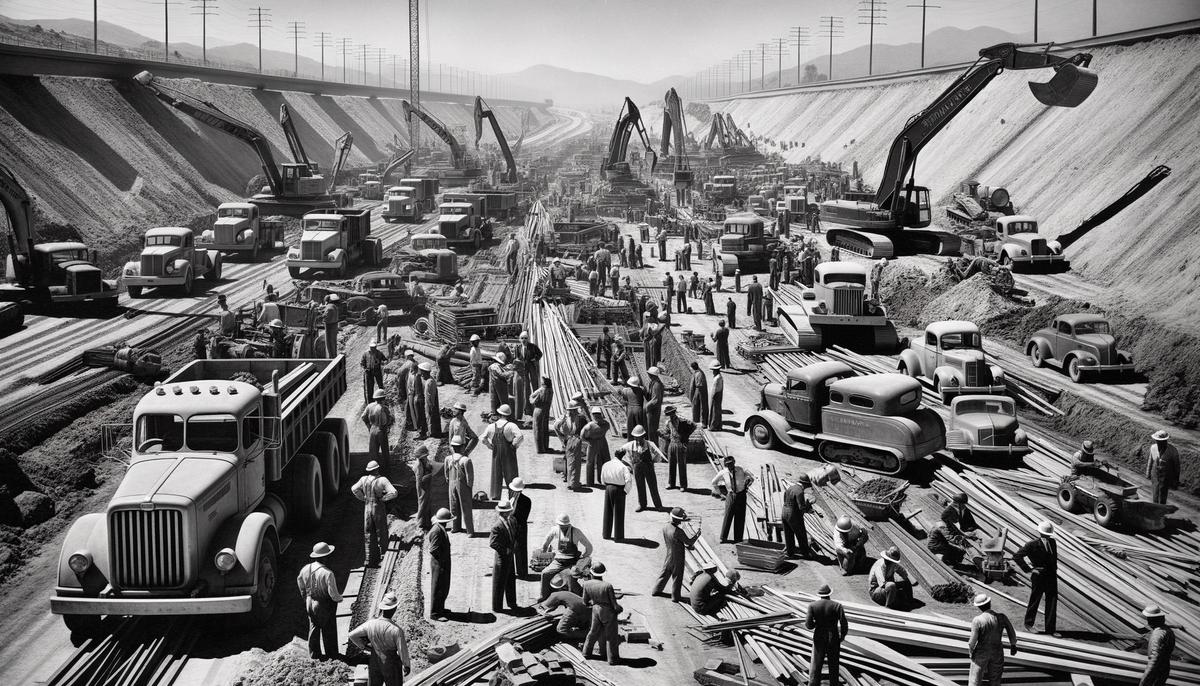
The Federal-Aid Highway Act of 1956 rerouted America’s very veins. The goal was to create a grand network of 41,000 miles of highway, stretching across the nation. President Dwight Eisenhower, inspired by Germany’s autobahns, knew America needed highways that would support modern life’s bustling tempos.
These roads promised to smooth out life’s little bumps by eliminating traffic jams and unsafe roads. However, they left small towns feeling like forgotten waypoints on a journey to progress. Trying to please everyone is like juggling while riding a unicycle, right?
The interstates rolled through landscapes, propping up cities while inadvertently pulling the rug out from underneath their smaller siblings. This idea delivered immense economic gains, growing the national marketplace and reducing transportation costs. But it also left behind echoes in once tight-knit communities.
Highway construction reshaped more than just land. It uprooted thousands of households, carving through neighborhoods and altering daily existence for many. In places like Miami’s Overtown or Syracuse’s 15th Ward, life transformed as bridges and ramps became the new sentinels.
As plans unfolded amid the civil rights movement, highways transformed into new segregators, creating tangible barriers. Figures like Robert Moses drove this change with an influence larger than a Cadillac Eldorado. For him and city planners alike, highways were bowstrings ready to launch urban renewal.
While the act paved the way to liberty for many—giving access to suburban dreams—it’s vital to remember that it also severed the bonds of small communities. This ambitious undertaking reminds us that while America was united in motion, it came at a cost—a dash of bittersweet.
Impact on Urban Communities of Color
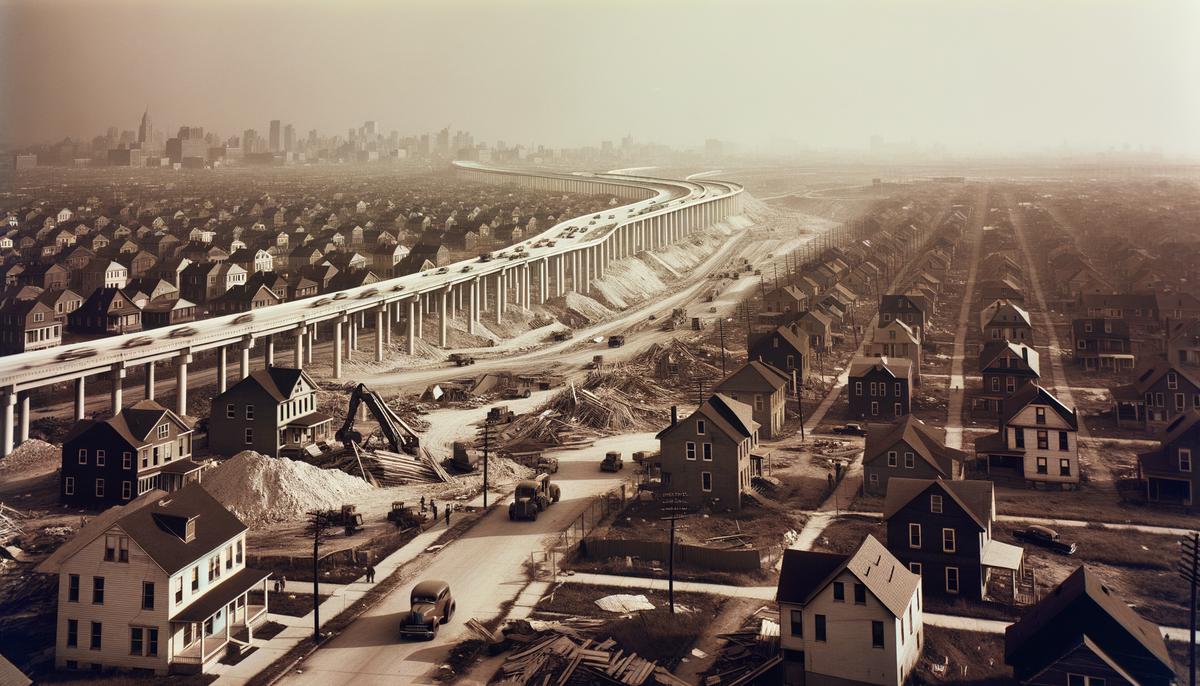
The impact on urban communities, especially those of color, is like a dark cloud on an otherwise sunny day. The sweeping lines on maps uprooted more than a million people, turning neighborhoods from bustling to barely-there. It’s a bit like watching your favorite local diner get replaced by a chain restaurant—only much bigger and more life-changing.
In cities across the nation, interstates barreled through communities of color, largely ignored in the decision-making process. Imagine waking up to find a highway taking the place of your local park or the church where generations gathered. It’s a change that bulldozes more than just roads.
Miami’s Overtown, once known as the “Harlem of the South,” and Syracuse’s 15th Ward saw vibrant black communities slaughtered by highway construction. These neighborhoods lost:
- Homes
- Schools
- Businesses
- A sense of community—a tightly woven fabric now shredded apart
Highways often reinforced segregation, serving as physical blocks between white suburbs and minority urban centers. It’s a bit like being promised a seat at the table only to find out you’re still dining at the kiddie table, miles away from where decisions are made.
The toll wasn’t just in buildings, but in opportunities lost and communities displaced. People were corralled into smaller, already struggling areas, fueling cycles of poverty. Jobs vanished as businesses closed; streets turned to highways that no longer stopped for local lives.
While some saw access to new regions and faster routes to opportunity, the cost was steep, especially for those who didn’t ask for this evolution. It’s a reshaping that left scars still visible today, a reminder that sometimes the road to progress has a few potholes of its own.
Who Decided Where the Highways Went?
Urban planners and policymakers wielded their pens like magic wands, often transforming vibrant communities into construction battlegrounds. Robert Moses, a titan in his craft, saw highways as the remedy for urban decay—a bulldozer from which ‘undesirable’ neighborhoods could be purged.
His vision of large expressways cutting through the urban weave was more invasive surgery than urban therapy. To his mind, blighted areas were ripe for clearance, as highways slashed through cities like seams in a garment.
Highway routes often became the battlefield where politics and prejudice met asphalt. The roads twisted and turned, built to enforce existing racial divides—as if the highways themselves were concrete dragons protecting suburbs from urban jungles.
Policymakers believed highways could serve noble causes—connecting suburbs with urban centers for a seamless commuter experience. But these efforts often reinforced segregation sentiments. What was framed as urban renewal turned into a game of musical chairs, with communities of color left standing with no seats.
The broader implications of these maneuvers ripple through time, visible in enduring socioeconomic divides. As drivers hustle along these highways today, perhaps some wonder what once stood where now only roads remain.
The highways were meant to herald a new age and delivered lanes of opportunity for some. Yet, they also saw many communities rerouted from vibrant neighborhoods to mere history notes. As we hop in our cars, let’s remember the lessons cradled in their foundations.

The Towns That Disappeared When America Hit the Gas
As highways carved their paths across America, small towns felt a quiet but significant shift. It was as if their once-bustling streetscapes slowly faded, leaving a poignant silence. These were the towns left in the dusty rearview mirror, suddenly far removed from the flow of commerce and culture.
Places like Peach Springs, Arizona, felt the chill of being bypassed, their vibrant crossroads turned into distant memories. The magnetic pull of highway exits reshaped population flows. People gravitated toward the shiny promises of suburban life, lured by convenience and modernity.
Commerce rerouted itself to the hum of progress, drawing away from locally owned stores on Main Streets. These mom-and-pop shops saw their lifeblood siphoned off to chain stores blooming around every highway exit. Suddenly, fast food franchises and motels sprouted with all the predictability of commercials during prime-time television.
Local diners that had once buzzed with gossip now quietly faded. The pace and pattern of such places, with sidewalks once bustling with neighbors, suddenly felt empty.
Yet, the road ahead wasn’t entirely bleak. The highways mirrored cultural shifts taking shape across the nation. They elevated a new kind of freedom—the weekend getaway, the cross-country trek, the American road trip dream. But they also raised questions about the balance between progress and preservation.
As we flash past these humble landmarks, perhaps it might do us good to pause on occasion. Because while the highways may not have stopped at these towns, the hearts of those who remember them keep those memories alive, reminding us to cherish the quaint spirit of community.

Legacy and Current Reassessment
As time has passed, the impact of our once-prized highways is getting a fresh look. Those expansive roads brought the nation closer, but they also left some communities wondering what just happened. Nowadays, there’s talk about the legacy of those mighty interstates. Could it be that the very roads catapulting us into the future might need a bit of fixing up? You bet.
Some planners have decided to rewrite parts of the script. They’re trying to reconnect communities that highways once kept apart. It’s not just a trip down memory lane, but an attempt to right some wrongs.
Leading the charge are initiatives like the “Reconnecting Communities Pilot Program,” led by Secretary of Transportation Pete Buttigieg. This program aims to mend neighborhoods isolated by past transportation decisions, bringing opportunity back to cities.
Syracuse’s I-81 project is a good example. Folks there want to repair the damage done to their communities. The plan aims to keep locals involved, focusing on fairness and bringing people together.
But reconnecting isn’t easy. It’s like trying to keep a hula hoop spinning while juggling oranges. Planners have to be careful not to cause new problems while fixing old ones. They’re walking a fine line between improving areas and accidentally pushing out long-time residents.
Cities across the country are thinking about whether to repair the cracks made when concrete met big dreams. They’re hoping for a more inclusive future, where highways aren’t just about getting from A to B, but about the journey between.
Roads can transform just about anything. What’s happening now might be a chance to heal old wounds by bringing cities together in new ways. There’s an opportunity to remember that it wasn’t just concrete that made this country great, but the stories of all the different communities along the way.

Reflecting on the legacy of the Federal-Aid Highway Act, it’s evident that while it united distant places, it also fragmented communities. The challenge now is to learn from the past and work to reconnect those affected by these changes, ensuring that future progress includes everyone.
Key Impacts of the Interstate Highway System:
- Connected major metropolitan areas
- Served national defense purposes
- Linked routes with Canada and Mexico
- Contributed to urban decentralization
- Improved economic efficiency
- Led to suburban expansion
However, the system also had negative consequences:
- Displaced and divided urban neighborhoods, particularly minority communities
- Bypassed and economically impacted small towns
- Drew population away from central cities
As we move forward, it’s crucial to balance the economic benefits of highway infrastructure with the social and community impacts. The ongoing reassessment of our highway system presents an opportunity to create more equitable and sustainable transportation networks for the future.